The Chinese Betrothal Gift Ceremony: A Complete Guide to Guo Da Li
If a relative has just handed you a list of betrothal gifts and you have no idea where to begin, you are in good company. How many pairs of coconuts? Why must the dried seafood include black moss? And what on earth does the little gold pig signify? Friends tell you to "keep it simple", while the older generation insists that "every detail matters". Caught between the fear of breaching etiquette and the fear of offending family, almost every engaged couple feels this particular brand of anxiety.
The true meaning of the Chinese betrothal ceremony has never been about the quantity of gifts. It lies in the blessings that each item has carried for over a thousand years. This guide walks you through the symbolism behind every gift, the logic of the ceremony and the origins of its many taboos — so that you are not simply ticking items off a list, but genuinely understanding the heart of the ritual. With that understanding, you can approach this milestone for both families with confidence.
A note on the name: the Chinese betrothal gift ceremony is known in Cantonese as Guo Da Li (過大禮), and is sometimes called the "grand gift" or simply "presenting the betrothal gifts". Whatever you call it, it marks the same moment: when the groom's family formally delivers gifts to the bride's family to confirm the engagement. Throughout this guide we explain each Cantonese and Mandarin term in plain English, so nothing is lost along the way.
1. What Is the Chinese Betrothal Ceremony? A Thousand Years of Tradition, Seen Through the "Three Letters and Six Etiquettes"
The betrothal ceremony is the weightiest and most heartfelt of all the rituals in a Chinese wedding, with roots reaching back to the Western Zhou dynasty (around 3,000 years ago). To understand why it matters, it helps to know the framework that underpinned a "proper" marriage in old China — the "Three Letters and Six Etiquettes" (三書六禮).
The Three Letters
These were the formal written documents of the engagement — in effect, the legal contracts of their day:
- The Betrothal Letter (聘書): confirming the engagement itself.
- The Gift Letter (禮書): itemising the gifts presented at the betrothal ceremony.
- The Wedding Letter (迎書): presented on the day the groom comes to collect his bride.
The Six Etiquettes
These were the six stages from proposal to wedding day:
- Na Cai (納採) — the proposal.
- Wen Ming (問名) — exchanging the couple's birth details for compatibility.
- Na Ji (納吉) — the formal engagement once the omens were favourable.
- Na Zheng (納徵) — the presentation of the betrothal gifts. This stage is what we now call Guo Da Li, and the subject of this guide.
- Qing Qi (請期) — choosing an auspicious wedding date.
- Qin Ying (親迎) — the wedding day itself.
The betrothal ceremony: the heart of the six stages
The character "na" refers to the betrothal gifts, while "zheng" carries the sense of "sealing" or "making it final". On a chosen auspicious day, the groom's family brings the betrothal money, the ceremonial cash gift and a generous array of symbolic gifts to the bride's family — marking the moment the engagement becomes official.
Why does the betrothal ceremony matter so much?
- It formally seals the engagement. Once the bride's family accepts the gifts, the betrothal is official — a sign that the marriage has the blessing of both families and their ancestors.
- It shows sincerity and commitment. Historically, the generosity of the gifts reflected how much the groom's family valued the bride, and their ability to provide for her future.
- What it means today. Although much of the old formality has been pared back, the betrothal ceremony remains the occasion on which two families formally meet and begin to build their bond. A thoughtfully prepared set of gifts is the groom's heartfelt thank-you to the bride's parents for raising her.
2. The Complete Gift List and What Each Item Means (Traditional vs. Simplified)
A full traditional betrothal ceremony can run to some twenty categories and well over a hundred individual items — eight kinds of dried fruit alone, plus coconuts, betel nuts and even live chickens and fish. Most modern couples simplify this with an "all-in-one" red packet that stands in for the items that are hard to source. But however far you streamline, understanding the logic behind the gifts is what allows you to make sensible choices when discussing them with your elders.
🧧 The logic of the gifts: three guiding principles
- Everything in pairs. Quantities are always even, symbolising that the couple comes "as a pair, growing old together". The one number to avoid is four, which sounds like the word for "death" in Chinese.
- Blessings through wordplay. Each gift is, in effect, a spoken blessing. Lotus seeds sound like "giving birth to noble children in succession"; black moss (fat choy) sounds like "striking it rich"; coconuts evoke "having a father and sons". Through homophones, the older generation tucked their wishes into tangible objects, making the blessing something you can hold.
- Three kinds of gift. A complete set of betrothal gifts brings together three groups. The principal gifts (betrothal money, wedding cakes, gold jewellery) express the groom's family's sincerity; the foodstuffs (dried seafood, the "three meats", fresh fruit) wish the couple a life of plenty; and the symbolic items (dragon-and-phoenix candles, coconuts, betel nuts, the "good-fortune box") carry the cultural blessings. All three are essential.
📦 The full gift table
| Gift | Traditional form and meaning | Modern simplified form |
|---|---|---|
| Betrothal money (禮金) | Presented in a large red packet, expressing thanks to the bride's family for raising her. An amount ending in the lucky number eight is considered most auspicious. | Unchanged — still given in a large red packet. |
| Dragon-and-phoenix wedding cakes | Two pairs of dragon-and-phoenix cakes are essential, symbolising marital harmony. Other traditional pastries each carry a wish — for prosperity, good fortune, lifelong union and a loving marriage. | A token set of eight cakes, plus cake vouchers (Western or Chinese bakery). |
| Dried seafood | Given as a set of four, six or eight types. Black moss ("fat choy", sounding like "prosperity") is a must; other choices include abalone, dried mushrooms, dried oysters ("good deeds"), scallops, dried shrimp, squid and fish maw. | A single red packet labelled "dried-seafood money". |
| The "three meats" | Two pairs of chicken (two hens, two cockerels); 3–5 catties of pork cut in one connected piece that opens out like a butterfly or pair of wings (a sign of abundance and "coming two by two"); and a pair of fish (grass carp or mud carp, for "abundance and surplus"). | A single red packet labelled "three-meats money". |
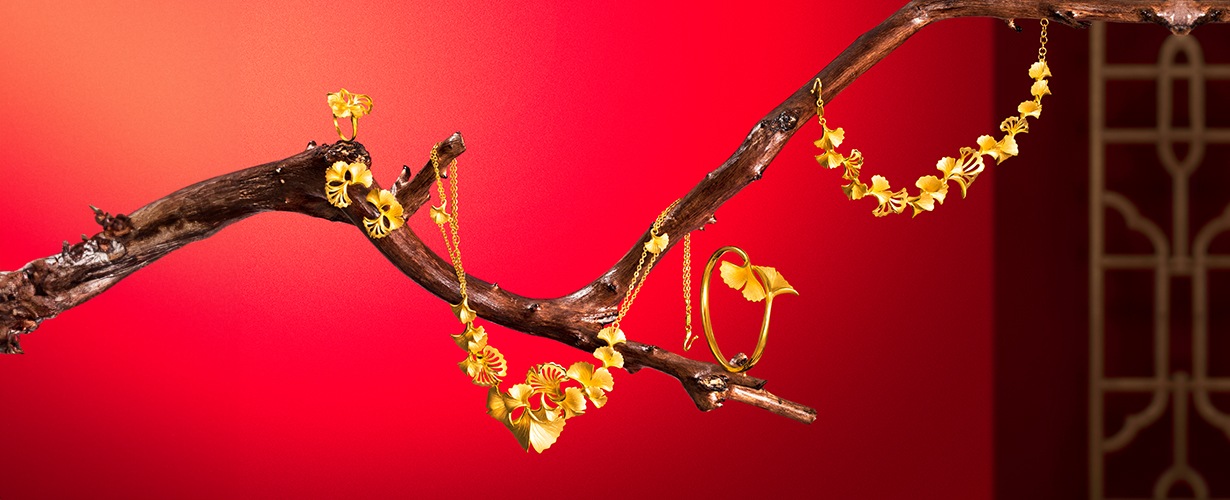
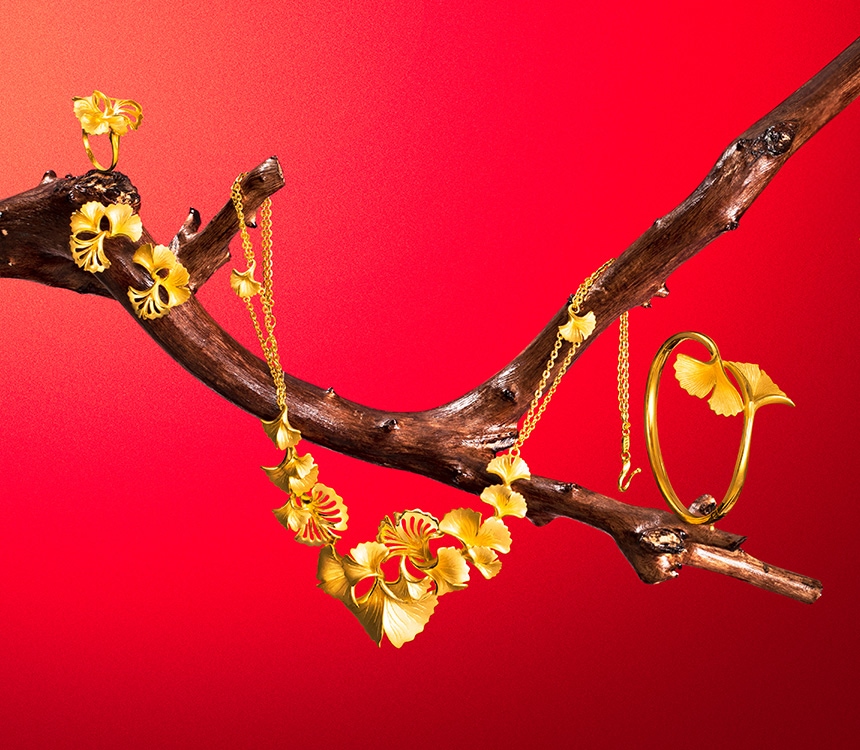
| Four- or five-piece gold set | A necklace, dragon-and-phoenix bangles, gold earrings and a gold ring (with a pendant or gold pig added to make five). This is the groom's mother's gift to her future daughter-in-law. | Unchanged — the gold is the soul of the betrothal gifts and is best kept. |
| Fresh fruit | Usually four kinds, in even numbers, wishing the couple vitality. Common choices: apples (peace), tangerines (good luck), dragon fruit (a "red-hot" flourishing life) and grapes (many children). | Kept as is, or partly replaced with a red packet. |
| Coconuts | Two pairs, sounding like "having a father and sons" — a wish for many children and grandchildren. | Folded into the "all-in-one" red packet. |
| Betel nuts | Four, sounding like the word for "guest" — a wish for a home full of welcome friends. | Folded into the "all-in-one" red packet. |
| Dragon-and-phoenix candles | Two pairs, used in the hair-combing ceremony; lighting them announces the happy occasion to the ancestors. | Unchanged — still needed for the hair-combing ceremony. |
| Wine or spirits | Four bottles; traditional rice wine or Western spirits are both acceptable. | Kept as is, or folded into the red packet. |
| Tea leaves and sesame | Tea symbolises faithfulness (a tea bush, once planted, cannot be transplanted); sesame represents a flourishing line of descendants. | Folded into the "all-in-one" red packet. |
| The "good-fortune box" | Containing red dates, peanuts, longan, lotus seeds (for "children soon"), lily bulbs, cypress, red string, a red packet and jewellery. | Unchanged — usually prepared by the cake shop. |
🧧 The "all-in-one" red packet is the modern couple's saviour. A single packet stands in for the coconuts, betel nuts, dried seafood, three meats, sweets and other items that are awkward to source, with the packet labelled to show what it represents. The amount is entirely up to you — just remember to end it in an eight.
3. Decoding the Wedding Gold: the Four- and Five-Piece Sets, the Dragon-and-Phoenix Bangles and the Gold Pig
Of all the betrothal gifts, none draws the eye quite like the gold. It is more than a show of means — it is the elders' blessing to the couple. Traditionally, gold was a woman's private nest egg and her security; today, that same sense of "something to fall back on" has evolved into a way of passing down both affection and family wealth.
The four-piece set vs. the five-piece set
- The four-piece set (四飾金): a necklace, bangles, earrings and a ring — the standard for a traditional Cantonese wedding.
- The five-piece set (五飾金): the four-piece set plus a pendant, or an extra pair of bangles. The Chiuchow (Teochew) community places particular value on the five-piece set, for the wish of "five blessings arriving at the door".
What each piece of gold means
| Piece | Core meaning | Design notes | How it's worn |
|---|---|---|---|
| Dragon-and-phoenix bangles (a pair) | Marital harmony; a match made in heaven | The dragon and phoenix appear together, symbolising the balance of yin and yang | Always worn as a pair — dragon on the left, phoenix on the right |
| The gold pig | A flourishing family line; many children and grandchildren | A large pig with piglets; the more tiers, the deeper the blessing | Worn with the traditional Chinese bridal gown (the kwa) |
| Floral gold necklace | Blooming prosperity; a lifelong, happy union | Often features peony, lily or lotus designs | Lily for lifelong union, peony for prosperity |
| Gold earrings | Closeness and being inseparable | A symbol of intimacy — of always talking things through together | Matched with the necklace; frames the face |
| Gold ring | A lifelong promise; holding happiness in a circle | Represents the contract and commitment of marriage | An adjustable design suits different finger sizes |
🐉🦚 A closer look: the symbolism of the dragon-and-phoenix bangles
The dragon-and-phoenix bangles are the most culturally rich part of the whole ceremony. But why must the dragon and phoenix always come as a pair?
Harmony of yin and yang
- The dragon represents strength and protection — the groom.
- The phoenix represents grace and gentleness — the bride.
- Together they symbolise a match made in heaven and a harmonious union. They are always worn as a pair (dragon on the left, phoenix on the right), a sign of two hearts that will never part.
Common motifs and their meanings
- Dragon and phoenix chasing the pearl: the pearl stands for a complete and contented life, the couple pursuing a good life together.
- Auspicious clouds and water ripples: a smooth and rising path, and wealth flowing in.
- Blooming flowers of fortune: often paired with the dragon and phoenix, symbolising a thriving family.
Choosing well: a few professional tips
- On craftsmanship: "Excellence Hard Gold electroforming" (known in the trade as 5D hard-gold electroforming) is formed by electro-deposition, giving it far greater hardness and durability than conventional electroforming. That strength is precisely what allows it to carry fine surface techniques such as hand-engraving, filigree and relief work — producing designs that look raised and substantial, resist deformation, and are made by a more environmentally friendly process.
- On weight and presence: It used to be that "heavier meant grander". Advances in hard-gold electroforming have changed that. Because the pieces are formed as light, hollow, three-dimensional structures — yet remain strong — even a piece as light as 0.5 tael can be made with a generous width and a full, substantial look. It flatters the lines of the bridal gown while staying light and comfortable to wear. In short, today's couples can enjoy more presence from less gold.
- On legacy: The dragon-and-phoenix bangles are a wedding heirloom to be handed down. When choosing, consider whether the design is classic enough to last — a fine pair of bangles is a gift and a blessing for the next generation.
🐷 The gold pig: a charming wish for many children
If the dragon-and-phoenix bangles represent the couple's promise to each other, the gold pig is the elders' most candid blessing of all.
Why a pig?
In southern Chinese (Lingnan) culture, the pig represents abundance and vitality. The gold pig has its origins in the custom of presenting a roast pig to the ancestors — a symbol of the bride's purity and of a flourishing household.
- Many children, much fortune: pigs are fertile and easy to raise, so a gold pig from the elders wishes the couple a large and growing family.
- A life free of want: the pig lives without a care, symbolising a comfortable, well-provided life for the bride in her new home.
The little details in the design
Look closely and you'll notice the gold pig is rarely a single pig — it's usually a whole family of them.
- A sow with her piglets: the classic design has one large gold pig above, with a row of (usually six or eight) little gold piglets dangling below — "children and grandchildren, all together".
- Tiers that matter: from a single tier to a lavish three or five tiers — the more tiers, the grander the look and the more the blessings stack up.
A modern look: from "old-fashioned" to refined
Worried a gold pig might look dated? Modern jewellery craft has given it a fresh face: rounded, endearing lines and three-dimensional openwork pendants, combined with the refined, substantial quality of "Excellence Hard Gold electroforming". Worn with a traditional Chinese bridal gown, it carries a quietly sophisticated charm.
4. The Ceremony in Six Steps (the Modern, Streamlined Version)
The traditional ceremony was elaborate. Most couples today keep things simple, focusing on the key gifts and on the spirit in which they are given. The whole thing usually takes between 30 minutes and an hour.
Step 1: Prepare the gifts — good things come in pairs
- Choose the day and divide the gifts. Once an auspicious day is set, the groom's family prepares the gifts in advance. To make the bride's family's "return gift" easier on the day, it helps to divide the betrothal gifts into two portions from the start.
- Assemble the party. The groom's family arranges a gift-bearing party: a "good-fortune woman or man" (someone with a living spouse and both sons and daughters, considered a bringer of luck), the dai kam (a professional bridal attendant who guides the ceremony), and relatives or groomsmen. The total should be an even number — six, eight, ten or twelve.
Step 2: The couple steps aside — sincerity comes first
- The groom's part. On the day, the groom and his party bring the gifts to the bride's home. Traditionally the groom does not go inside (he waits at the door); his relatives or the good-fortune woman/man carry the gifts in.
- The bride withdraws. Before the gifts come in, the bride returns to her room and stays out of sight — a gesture of dignity and grace.
Step 3: Open the gifts — and offer the blessings
- Speaking the good wishes. The groom's party presents each gift in turn. If the dai kam is present, she opens each box while reciting its auspicious meaning (such as "marital harmony" or "a flourishing family"), adding to the joy on both sides.
- The parents receive the gifts. The bride's parents welcome the groom's party and formally accept the cash gift and the betrothal gifts.
Step 4: The return gift — thanking the groom's family
- Returning about half. To thank the groom's family, the bride's family gives a "return gift" on the spot — typically sending back about half of what was received.
- Gifts for the son-in-law. The bride's family also prepares gifts such as trousers (for lasting prosperity), a wallet (for wealth), shoes and a belt — today often replaced with a "son-in-law" red packet.
- Dividing the gold. Of the four- or five-piece gold set, the bride's family keeps the earrings and ring (which the bride puts on once she is in her gown on the wedding day); the bangles and necklace are returned to the groom's family, to be placed on the bride by the groom's parents during the tea ceremony when she enters her new home.
Step 5: A photograph together — sharing the joy
Once the return gifts are settled, the ceremony is complete. The groom may now come inside and the bride may leave her room, and the couple and both families gather for a photograph in front of the gifts — a memento of this precious moment.
Step 6: A happy ending — and never say "goodbye"
As the groom's family leaves, a nod, a smile or a word of congratulation is all that is needed. Whatever you do, do not say "goodbye" — the wish is that a marriage happens only once, and lasts a lifetime.
5. Taboos and Points to Watch
The betrothal ceremony is a joyful occasion, but it comes with a long list of taboos. Here are the key ones every couple should commit to memory — worth saving as a checklist.
⚠️ Numbers and headcount
- All gifts, cakes and red packets must be in even numbers, for "coming as a pair".
- Avoid the number four (it sounds like "death") — even the otherwise-even 4, 14 and 24 are best avoided.
- The gift-bearing party should be an even number — six, eight, ten or twelve.
⚠️ Fruit and plants
Fruit should be in even numbers, and you should steer clear of any whose name sounds unlucky:
- 🚫 Pears — they sound like "parting".
- 🚫 Certain citrus — some names sound like "misery".
- 🚫 Mango — sounds like the word for "death".
- 🚫 Anything with "melon/gourd" in the name — associated with passing away.
⚠️ The couple's conduct
- On the day, the groom and bride must not see each other; the bride stays in her room (tradition held that if the groom were present when the bride's family gave their consent, he would be seen as "marrying into" her family).
- When lighting incense at the ancestral offering, a candle that goes in crooked must not be reinserted — re-lighting carries the unwanted sense of "marrying twice".
- Expectant mothers, those in mourning and anyone whose zodiac sign clashes with the couple's traditionally stay away.
⚠️ Handling the gifts
- If any gift must be thrown away (spoiled food, for instance), wrap it in red paper first, as a mark of respect.
- Red packets for items such as the dried seafood and the three meats must always be given in pairs.
- Red-packet amounts should end in an eight, and never contain a four or a seven.
⚠️ Saying farewell
When seeing off the groom's family, never say "goodbye", "see you next time" or "bye-bye", as these hint at "doing it all again" — at odds with the wish for a once-in-a-lifetime marriage. A "congratulations", a "well done", or simply a nod and a smile will do.
❌ Among the gifts for the son-in-law, never include a handkerchief — it carries the meaning of "parting ways", and is considered most unlucky.
6. The Five Details Couples Most Often Forget
These are the small but crucial things couples most often overlook — the kind of detail that, if missed, can make the day awkward. It is worth running through this list a week before you present the gifts.
1. Preparing only one "all-in-one" red packet
The most common slip of all. The "all-in-one" packet is itself one of the gifts, so it must come as a pair — each one representing different traditional items (the dried seafood, three meats, coconuts, betel nuts and so on). A single packet counts as an odd number, which is unlucky.
2. Forgetting the dragon-and-phoenix candles
Many couples assume the dragon-and-phoenix candles are merely decorative. In fact they are central to the hair-combing ceremony, so they must be ready on the day the betrothal gifts are presented — they are used on the eve of the wedding, and must not be left unattended until they have burned down on their own. Remember to prepare two pairs: one for the groom's family and one for the bride's.
3. Choosing the wrong fruit
The usual pitfalls: pears ("parting"), certain citrus ("misery"), mango ("death") and anything in the melon/gourd family. However good the seasonal fruit looks, hold to the traditional taboos — where possible, the safest bet is to let the cake shop or an elder make the selection.
4. A gift-bearing party that ends up odd-numbered
When you count heads before setting off, a last-minute drop-out or addition can leave you with an odd number (seven or nine, say). The party must be even — six, eight, ten or twelve — for "coming as a pair". Confirm numbers in advance, and have one or two people on standby just in case.
5. The wrong number of red packets, or the wrong final digit
Every red packet in the betrothal ceremony — the dried-seafood money, the three-meats money, the son-in-law packet and the all-in-one packet — must come in pairs, at least two of each. Amounts should end in an eight (such as 888 or 1,888) and avoid four and seven. It helps to draw up a list of red packets beforehand and check the count and amount of each against it.
✅ A week before the ceremony, it is worth doing a "dry run" through this checklist together with both sets of parents (or the dai kam). It beats any online guide.
7. The Bride's Family's Return Gifts
Chinese custom sets great store by reciprocity. After receiving the gifts, the bride's family gives return gifts of their own — a sign of accepting the union of the two families.
💝 What the return gifts include
| Return gift | What it is, and what it means |
|---|---|
| Returning part of the betrothal money | Usually 10–50% is returned, the bride's parents' way of thanking their new in-laws, and a wish for a lasting, happy union. |
| Returning some of the gold | Of the four-piece set received, the bride's family keeps the earrings and ring, and returns the dragon-and-phoenix bangles and necklace to the groom's family — to be placed on the bride by the groom's parents during the tea ceremony. |
| The son-in-law's gifts | A suit, a pair of shoes, two pairs of socks, a belt, trousers and a wallet — today often replaced with a "son-in-law" red packet, expressing the family's fondness for him. |
| Tea and cakes in return | Tea leaves, steamed sponge cakes and fried sesame balls, wishing the couple great prosperity and a happy, harmonious home. |
| Half the wedding cakes | The dragon-and-phoenix pair must be returned; about half of the other pastries or cake vouchers are returned too. |
| Auspicious plants | A pair each of lotus root (a heaven-made match), pomegranate (many children), kumquat (year-round luck), taro (a thriving family), ginger, cypress, hibiscus and pomelo leaves. |
| Small gifts for the party | Small tokens (such as towels) for the groom's accompanying relatives, prepared by headcount (8, 18 or 28). Never give a handkerchief. |
Letting Tradition Become a Treasured Memory
The betrothal ceremony should never feel like a burden. It is a chance to talk things through with the older generation and to feel the warmth of family. When the bride slips on that gleaming pair of dragon-and-phoenix bangles, it is not just the weight of the gold she feels, but a blessing handed down across the generations. And when the groom's relatives and the bride's parents share a smile across the gifts, it is more than two families meeting — it is the moment two families begin to write a story together.
Once you understand the heart behind each gift, the ceremony becomes far more than the completion of a tradition: it becomes a genuine handing-on of blessings a thousand years in the making. May you, in this once-in-a-lifetime moment, savour every detail — with the person you love, and with the family who love you most.
💍 If you're looking for wedding jewellery, you're warmly welcome to visit our store and try the pieces on, with personalised advice from our specialists. We'd suggest booking one to two months before your betrothal ceremony, to allow enough time for any made-to-order pieces or resizing.